Destroy the Hispanic Industrial Complex
Neither Hispanidad nor Latinidad have done us any good. To the contrary, for us, they’ve been downright corrosive. I wouldn’t call them failed experiments—since there’s a small percentage of ethnic hustlers that have benefited from them tremendously.
I don’t know one respectable, well-versed advocate that has honestly said they are down with what they have brought us. I’m also not here to teach you about the differences between Hispanidad and Latinidad. It’s exhausting we’re still stuck on the most basic things when we should’ve been light-years ahead of that conversation already. The same goes for the definition of ethnicity, race, nationality… Look them up if you don’t know them. Learn the basics before joining these conversations. But please, for the love of God, know that Hispanic is not a race. Neither is Latinidad. Latin America has its own concepts of race, but there are numerous races within Hispanidad, and Black and white are two of them despite there being a very vocal group advocating for mestizaje. Some of us found it mind-boggling that there are folks who are quick to say to negros of Latin descent that they’re Black, but those very same people have a difficult time accepting the fact that there are white Hispanics. It’s so silly.
I’ve often wondered how people are exposed to studies about us—some of those people even cut checks to do those studies—have no reactions to them. It’s as if they’re carcasses of human beings—automatons. Like having no emotional reaction to diversity programs and departments not doing much for us. You read that? There are multiple multi-million-dollar diversity departments out there that aren’t doing what they’re supposed to do: bring us more access and more opportunities. Our numbers are abysmal in all fields: Hollywood, the media, corporate America… Usually they try to rectify this by hiring a high-profiled individual, and the more marginalized identities they can check off with their presence, the better. But that sometimes backfires spectacularly. How are you the diversity chief of Apple and say something as extremely stupid as “There can be 12 white, blue-eyed, blond men in a room and they’re going to be diverse too because they’re going to bring a different life experience and life perspective to the conversation.”? What a grade-A gaslighter. Those are the people who tend to get ahead and manage to get promoted. Not the people who are going to make a real difference—not in this country.

If you try to make a difference for the better for us, in any field, even within Hispanic entities, you will be punished for it—not just in white America, but everywhere. You will be penalized for doing the right thing. Even for something as simple, as benign, as beneficial as advocating for diversity. You will get punished for trying to be inclusive by men and women: if you ask for more than just Black, Brown, queer, disabled… representation. I’ve worked with Hispanic agencies that have million-dollar contracts in which I’ve recommended to do the simplest of things when they do their promotions: get stock photos of the people they’re trying to reach. That has been met with incredulity to the point of letting out racist comments such as “What are those negroes doing in that stock photo?” Or blurted out that an African American colleague was “being difficult” because he’s African American. Nobody batted an eye. I usually cut ties with entities and people like that—and as quickly as possible. I can’t be associated with such ugliness. And they usually have you sign an NDA before you join them. NDAs are demonic things, but they’re obviously needed for the protection of such shitty entities. Entities that deserve fire and brimstone.
Speaking of entities that deserve fire and brimstone, here’s a list of them that I want nothing more than their complete annihilation: Hispanic academia, Hispanic Hollywood, Hispanic orgs, Hispanic media, Hispanic diversity departments, Hispanic, Hispanic, Hispanic... They are just too many of them, usually supported by corporate and government money, that exist to stop us from progressing, to undermine our progress, and to pummel real advocates into submission. They have legions of ants ready and able to swarm any advocate to kill their voice. It’s all very sinister. Take the whole predatory Herbalife life thing: They donated money to a bunch of Hispanic orgs that were really mum once news broke out that they were preying on vulnerable communities, but especially the poor Latino immigrant community. The terrible New York Post covered that, out of all entities, because most of Latino media was too chickenshit to say anything about it. Sometimes white and African American media have to cover our real stories for us to follow suit. It’s embarrassing. It reminds me of a friend who told me the African American department of the entity she was working for went rogue and was killing it with their numbers, but the Latino one wasn’t allowed, so they did bad and was dismantled. I would’ve raised hell, but perhaps it’s a reason why I don’t work well with authority—with shitty authority. We can do better, folks.
Speaking of who can do better: Hispanic Hollywood, for far too long, has done us dirty. The other day I posted on Facebook that African Americans in Hollywood uplift more Latino talent than Latino talent in Hollywood. It’s a sobering, maddening, depressing truth that many creatives I know agreed with. But there’s an additional something to that: People are being uplifted without there being any sort of vetting so those folks walk around like they have never had a hand up. Just recently I found out that one of our stories, at least it is being proposed as a Latino story, is getting produced. A white man wrote the screenplay and a famous Latina who shall remain nameless will be directing it. This Latina has mostly produced stereotypical content and more than once has punched down on our community. Now white media and African American celebrities are hailing that as some sort of win for us. Truly, we can’t win. Even from folks who should know better, we don’t get any better. I expect to be elbowed for raising hell about it, but supposedly a Latina was brought onboard because of me. Let’s see. I’m not holding my breath, though. I know better. The whole world is a hustle. Everyone is rearranging chairs to make it seem like there will be one for us, but it’s always the same people who get the opportunity to sit down on ‘em—not the rest of us.
There are some people and entities making it seem like we are super upwardly mobile, even though we’re slightly above African Americans in accumulating wealth and their numbers are abysmal, too. African Americans are faced with the double-edged sword, the accursed hypervisibility that doesn’t translate into wealth—only for a negligible number of them and that number happens to be mostly of celebrities. Celebrities that mask the crippling poverty they are in. I fear we’ll also be in the same boat if we’re plastered everywhere in the media. That’s why we need more than symbols to uplift us out of poverty. We need progressive policies—except that most of Hispanic media, English and Spanish-speaking, are owned by corporations that are, business-wise, right-wing (down to the mostly white Hispanic faces on the news). So they promote neoliberal politicians who are in the business of exploiting our identities for votes, for money, for power. We can’t uplift ourselves with that type of evil gaslighting and double-speaking to us.
Both Hispanidad and Latinidad have been used as singular marginalized identities to obscure racism, colorism, xenophobia… As in, most Hispanic people in the media, corporate America, academia, you name it, are either white or light-skinned Hispanics. Hispanics who might face “cultural racism,” but that still doesn’t stop them from representing the majority of us Black and Brown Latino people. They literally get all the benefits of our identities while experiencing less oppression—to the point of them oppressing us, too. I’ve seen mostly white Hispanics running Hispanic PR agencies. I’ve seen mostly white Hispanics running Hispanic orgs. I’ve seen mostly white Hispanics speaking for us in the media. I’ve seen mostly white Hispanics representing us in Hollywood. I’ve seen mostly white Hispanics running political campaigns. I’ve seen mostly white Hispanics musicians singing Black music in the music industry (both mainstream and Latino). There are exceptions, of course, but those exceptions tend to be of Brown men who, behavior-wise, you couldn’t tell them apart from the white men and women who crush us. It is all a clusterfuck of clusterfucks.
Funny enough, I prefer business models over orgs. I’m good with the eradication of most orgs and replacing them with good paying jobs for our people. Jobs that don’t depend on charity, on a support that will turn us into voiceless puppets. That includes orgs for more representation of us in Hollywood and the media. If you only knew the amount of money being funneled into smoke and mirrors, you’d be raising hell with me too. But alas, I’m one of a handful of people who want to do away with all these ethnic and poverty hustling pendejos.
I prefer the word destroy over dismantle. Since I, along with many of my young peers, want the complete destruction of entities that help with our disenfranchisement instead of tearing them to pieces. The pieces will still exist and form another Voltron of vendidos, of sellouts… We can’t have that anymore. Especially when the apocalypse is nigh.
If you’re going to join any Hispanic entity, work tirelessly to undermine it as much as it tries to undermine us. And send your favorite independent advocate your money instead. They’re doing the brunt of the real work that’s going to be beneficial to us all.
Help destroy the sinister Hispanic industrial complex.
All that said, and before people jump on me, there are a handful of local entities that are doing a lot of work that benefit our communities materially, but have limited resources. They are usually founded and led by women. Ask them what you can do for them. I know there are independent folks (individuals and families) within our communities that truly do help others, that truly do want to make a difference, and those folks aren’t in the minority. You might even find them in those big entities that deserve to be beaten into a pulp. I’ve done my share of help and I’ve received my share of help. I’ve appreciated that immensely as I’m sure those I’ve helped appreciate what I’ve done for them.
I’ve always said that community is about reciprocity. The Hispanic industrial complex only takes, takes, takes. That’s why it deserves to be destroyed.
It’s up to us to validate, to help, and to uplift ourselves.
Thanks for reading and sharing with your family and friends.
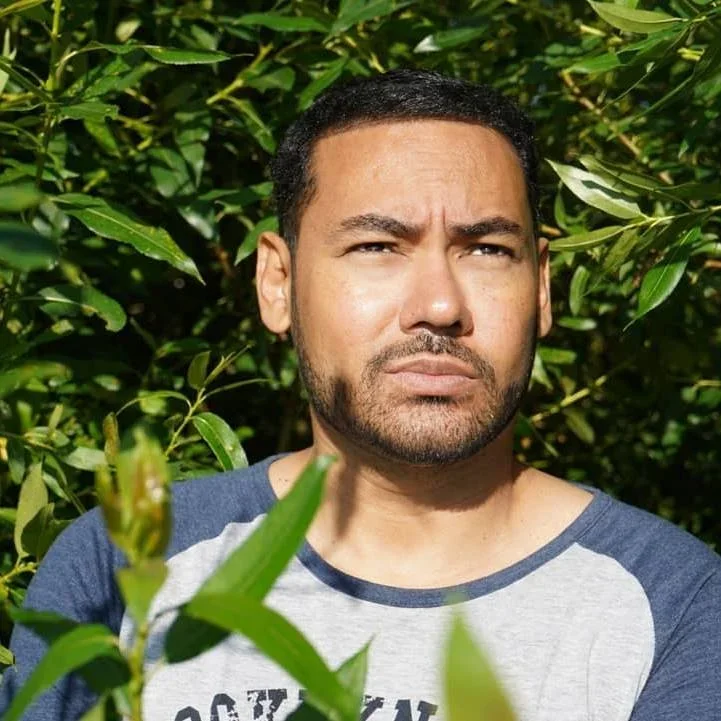
César Vargas is a Dominican-born writer, filmmaker, strategist, advocate, and cultural critic whose work cuts through the polite language often used to talk about race, immigration, media, identity, and power. Raised in Sosúa, Dominican Republic, and arriving in New York City at 12 years old, just two months shy of 13, Vargas writes from the complicated place between island and city, Spanish and English, Black and Brown, memory and survival.
His work is rooted in the lived experience of a Caribbean immigrant who had to learn America quickly: its racial codes, its hierarchies, its violence, its humor, and its contradictions. That early awakening shaped the voice he would become known for: sharp, personal, funny, uncomfortable when necessary, and deeply human. Vargas does not write to make systems sound better than they are. He writes to tell the truth plainly, especially when that truth has been avoided, softened, or buried.
Vargas has become an influential voice in modern Latino America through essays, cultural criticism, film, social commentary, and digital storytelling. His writing has explored race, Blackness, Afrolatinidad, Dominican identity, immigration, masculinity, class, politics, family, language, and belonging. Long before these conversations became common in mainstream spaces, his work helped push Afrolatinidad and Black Latino identity into wider public view, giving language to experiences many people had lived but rarely saw reflected with honesty.
His essays and commentary have appeared in or been quoted by NBC Latino, Fox News Latino, The Guardian, Salon, Sky News, The Hill, BET, Vibe, Okayafrica, Okayplayer, Voxxi, Latino Magazine, Latino Rebels, The Huffington Post, and other national and Latino media outlets. His work has also been published in The Bedford Guide for College Writers and White Latino Privilege: Caribbean Latino Perspectives in the Second Decade of the 21st Century. He was named one of HuffPost’s “40 Under 40: Latinos in American Politics,” and his essays have been taught in classrooms, shared across communities, and circulated in spaces as far-reaching as state prisons.
As a filmmaker, Vargas brings the same honesty and cultural eye to the screen. His short films Some Kind of Spanish and Black Latina Unapologetically received awards from Fusion and the National Hispanic Foundation for the Arts. With a degree in Film Studies from Queens College, CUNY, he has written, directed, edited, produced, and promoted work that understands both story and audience: how to make people watch, feel, argue, share, and remember.
His career has also been defined by strategy. Vargas has built audiences, launched platforms, shaped campaigns, produced viral content, and helped organizations find language that feels clear, human, and culturally fluent. At Being Latino, he launched the video segment as Production Director, wrote and directed viral content, worked across departments to build active engagement, and managed creative teams. His digital work has always been less about empty reach and more about real connection: the kind of engagement that moves people because it understands who they are.
At NAHREP, Vargas served as Creative Content Specialist, creating and shaping content across video, social media, events, campaigns, editorial projects, and public-facing storytelling. He helped make The Latino Brand series go viral, along with other projects that used culture, humor, clarity, and timing to reach audiences beyond the usual professional circles. He also helped launch Hispanic Wealth Project’s Wealth Stream News, contributing to the early editorial and content foundation of a platform focused on Latino wealth, homeownership, entrepreneurship, access to capital, and economic mobility.
Vargas has worked with and supported organizations, brands, campaigns, and cultural institutions including NAHREP, the Hispanic Wealth Project, L’ATTITUDE, d expósito & Partners, AARP, Tajín, Balsera Communications, America’s Health Rankings, United Health Foundation, RadioShack, the National Hispanic Foundation for the Arts, LISTA, the Research Alliance for New York City Schools, Big Brothers Big Sisters of New York City, Being Latino, Hispanicize, Twitter, Latino Rebels, and others. Across these spaces, his work has included editorial calendars, newsletters, webinars, social campaigns, event coverage, video production, speaker profiles, podcast promotion, presentation decks, marketing analysis, and content strategy.
He is also the founder of UPLIFTT, a former online magazine and cultural platform that built a loyal audience and reached millions through essays, commentary, and community-centered storytelling. UPLIFTT was part of a larger body of work that proved Vargas could do more than write a powerful sentence. He could build a platform, grow an audience, frame a conversation, and turn cultural insight into impact.
Readers, artists, scholars, activists, executives, and cultural workers have described Vargas’s writing as radical, brilliant, necessary, fearless, deeply personal, and the kind of work that hits hard because it tells the truth without asking permission. His voice has been praised for refusing to “toe the line,” for challenging hypocrisy, and for pushing people to think for themselves.
A Salinas Scholar with the Aspen Institute’s Latinos & Society Program, Vargas continues to build work across writing, film, strategy, and public storytelling. He is developing long-form creative projects, including a memoir rooted in Sosúa, migration, race, family, masculinity, memory, and the emotional education of becoming Black and Brown in America. He has also raised and distributed funds for causes close to his life and community, including support for poor Dominicans and Haitians in Sosúa, the town where he was raised.
Based in New York City, Vargas lives with his wife, Delmy, and their son, Omari. He continues to write, create, produce, and challenge the stories Latino America tells about itself, always with the same instinct: make it honest, make it human, and make it impossible to ignore.